From the spark of the first electrical experiments to today’s global networks, wire has quietly powered the story of human advancement. It’s the hidden thread connecting homes, industries, and entire civilizations — channeling energy, data, and innovation through strands of metal thinner than a finger. Whether carrying electricity to illuminate cities or transmitting information at the speed of light through fiber optics, wire remains the foundation of progress.
In the world of electrical systems, even simple questions — such as whether an electric fence ground wire needs to be insulated — lead to deeper reflections on how wire functions, evolves, and sustains our modern way of life.
Origins: How Ancient Civilizations Discovered the Potential of Wire
The story of wire begins thousands of years ago. Early artisans in Egypt and Mesopotamia twisted strands of copper and gold to craft tools, jewelry, and symbols of power. These primitive wires, though decorative, hinted at humanity’s growing mastery over metals.
By the time of the Roman Empire, wire production had advanced enough to support architectural and mechanical innovations. But it wasn’t until the 18th and 19th centuries — with the rise of the Industrial Revolution — that wire truly became a cornerstone of civilization.
The telegraph and early electrical grids transformed copper wire into the nervous system of an emerging technological world, setting the stage for the communication and power networks we depend on today.
Revolution: Industrial and Electrical Breakthroughs That Changed History
When electricity became harnessed for practical use in the late 1800s, wire found new purpose as a medium of connectivity. Thomas Edison’s power lines and Alexander Graham Bell’s telephone wires defined the infrastructure of the modern age.
Soon, materials science advanced alongside demand. Aluminum joined copper as a lighter, cheaper conductor. Insulation materials like rubber and polyethylene protected currents from interference, improving safety and efficiency.
From these innovations came the principles that govern even specialized systems today — including electric fences, where the balance between conductivity, grounding, and insulation determines both performance and safety.
The Science of Wire: Conductivity, Resistance, and Grounding
At its core, wire works because electrons flow through conductive materials — typically copper or aluminum — with minimal resistance. However, controlling that flow requires an understanding of insulation and grounding.
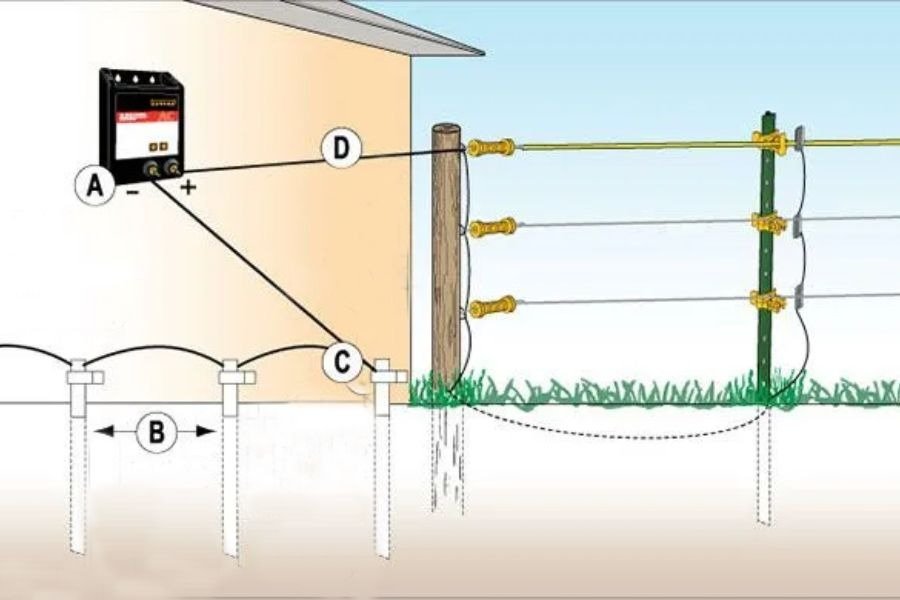
In an electric fence system, for example, the ground wire’s role isn’t to carry power but to complete the circuit when an animal or object touches the live wire. The current travels through the animal to the earth and back through the ground wire to the energizer.
So, does an electric fence ground wire need to be insulated? The answer lies in its purpose.
- No, the ground wire should not be insulated, because it must maintain direct contact with the earth to effectively complete the circuit.
- Insulating the ground wire would prevent the energy from returning to the charger, weakening or even disabling the fence’s shock potential.
In essence, grounding is the natural partner of conductivity — and together, they form the unseen equilibrium that defines every electrical system.
Types & Technologies: From Copper and Aluminum to Fiber Optics and Graphene
Today’s world runs on a dazzling array of wire technologies, each engineered for specific roles in energy and communication.
- Copper wire remains the standard for electrical transmission thanks to its unmatched balance of conductivity and durability.
- Aluminum wire offers a lighter, more cost-effective option in large-scale power lines.
- Fiber-optic cables, using strands of glass instead of metal, transmit data through light, revolutionizing global communication networks.
- Graphene and superconducting wires represent the frontier — capable of carrying current with near-zero resistance, enabling breakthroughs in AI computing, electric vehicles, and quantum systems.
Each iteration of wire — from the rustic copper of ancient smelters to the near-frictionless superconductors of tomorrow — reflects humanity’s relentless drive to improve connectivity and efficiency.
Modern Applications: How Wire Powers Innovation Across Industries

Wire doesn’t just transmit energy — it transmits possibility. In smart cities, miles of copper and fiber form the nervous system that powers IoT devices, sensors, and traffic management systems. In renewable energy, specialized cabling connects solar panels and wind turbines to the grid.
In healthcare, fine wire filaments form part of diagnostic equipment and even implantable medical devices. Space exploration relies on highly durable, lightweight wire to manage communications and control systems under extreme conditions.
Even an electric fence, humble as it seems, demonstrates the precision of electrical engineering: a system that protects livestock or property by leveraging the science of voltage, grounding, and material performance.
Sustainability & Future Trends: Smart Materials and Eco-Wires
As the world races toward electrification, sustainability has become central to wire innovation. Traditional metal mining and plastic insulation come with environmental costs, pushing researchers to develop greener alternatives.
Recyclable conductors, biodegradable coatings, and energy-efficient production methods are reshaping the industry. Companies are exploring carbon-neutral wire manufacturing and advanced recycling processes that recover copper, aluminum, and rare metals with minimal waste.
Meanwhile, “smart wires” embedded with sensors and AI-driven monitoring systems promise to reduce energy loss and detect faults in real time — a crucial step toward building resilient, self-managing power grids.
Conclusion
From the uninsulated ground wire of an electric fence to the superconducting coils powering quantum processors, wire is more than a material — it’s a metaphor for human connection.
Each strand represents centuries of innovation, a conduit through which human curiosity, intelligence, and creativity flow. Whether transmitting energy across continents or enabling the next leap in artificial intelligence, wire remains both a practical necessity and a symbol of our shared technological destiny.
In a world increasingly defined by wireless technology, it’s worth remembering that every invisible signal still depends, somewhere, on a wire — grounding our digital dreams in the timeless science of conductivity.
FAQs
1. Does an electric fence ground wire need to be insulated?
No, the ground wire should not be insulated because it must stay in direct contact with the earth to complete the electrical circuit.
2. Why is grounding important in an electric fence system?
Grounding allows the current to flow back to the energizer, ensuring the fence delivers an effective shock.
3. What materials are most commonly used for electrical wiring?
Copper and aluminum are the most widely used due to their high conductivity and durability.
4. How do fiber-optic wires differ from metal wires?\
Fiber optics transmit data through light signals rather than electricity, offering faster and interference-free communication.
5. What role does wire play in modern technology?
Wire powers communication, renewable energy, smart cities, transportation, and even space exploration systems.
6. Are there eco-friendly innovations in wire manufacturing?
Yes, new technologies use recyclable metals, biodegradable insulation, and energy-efficient production methods.
7. What are “smart wires”?
Smart wires are advanced cables with sensors and AI systems that detect faults and monitor energy flow in real time.
8. How does wire symbolize human progress?
Wire represents the connection between innovation and civilization — a timeless link driving technological and social advancement.
Keep an eye for more latest news & updates on techzloop.com!